
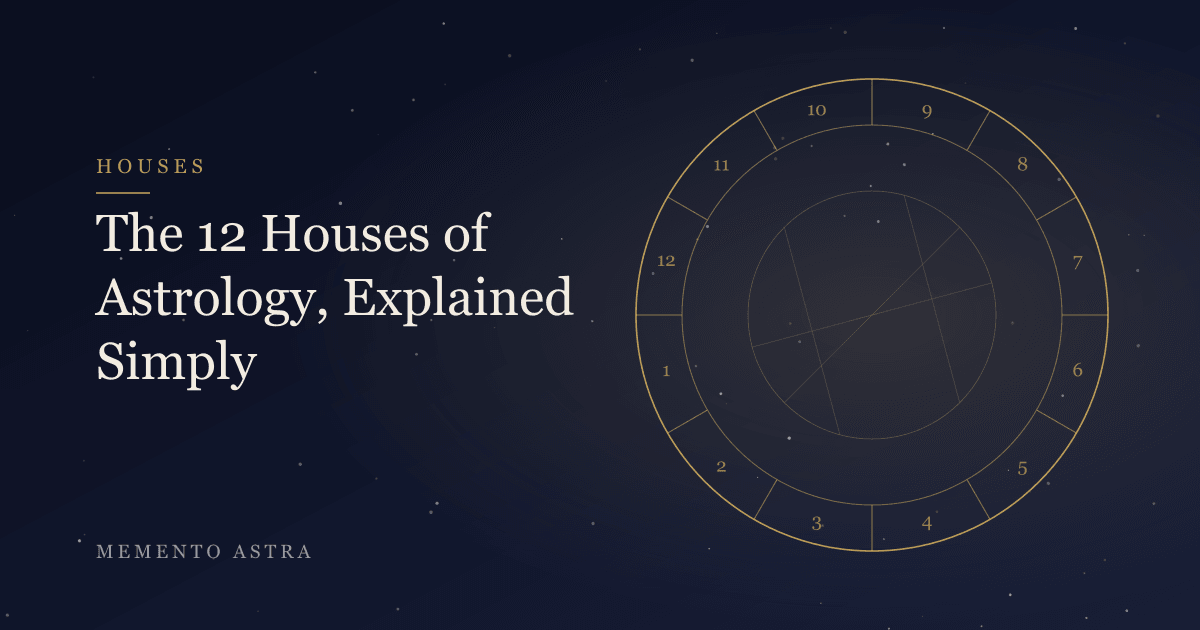
The 12 Houses of Astrology, Explained Simply
Houses are where astrology stops being vague. What each of the twelve governs, how to read an empty one, and why two chart calculators can disagree.
Reference
A sign says how, a planet says what, and a house says where in a life it actually happens. The twelve houses are the third leg of a chart reading and the only one that needs your birth time.
The first, fourth, seventh and tenth, which begin at the four angles of the chart. Traditionally the strongest placements: a planet here acts, and is visible doing it.
The houses that follow the angles. Read as consolidation: what gets held, kept and built on after something has been started.
The houses that fall away from the angles. Traditionally the weakest by position and the most associated with learning, adjusting and preparing rather than with acting.
Signs depend on the date. Houses depend on the horizon at the moment you were born, and the whole framework rotates by one house roughly every two hours. That is the entire reason a Sun-sign horoscope cannot use them and has to count from your Sun sign instead.
Also worth knowing before comparing charts across sites: there is more than one way to divide the houses. This site offers Placidus, Whole Sign, Equal and Koch, and they disagree, sometimes by a whole house. None of them is the correct one and astrologers have argued about it for centuries.
What each of the twelve covers, how to read a planet in one, and the house people ask about most.
Houses are where astrology stops being vague. What each of the twelve governs, how to read an empty one, and why two chart calculators can disagree.
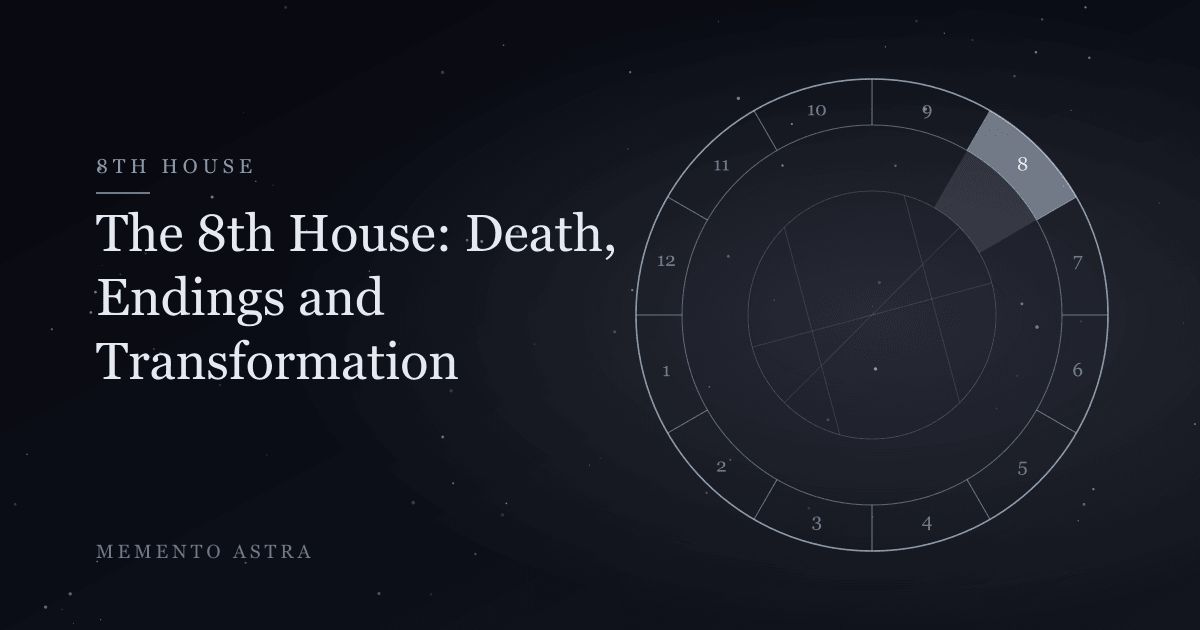
Astrology's house of death, inheritance and intimacy. What the 8th house means in your chart, sign by sign and planet by planet, and why it is misread.
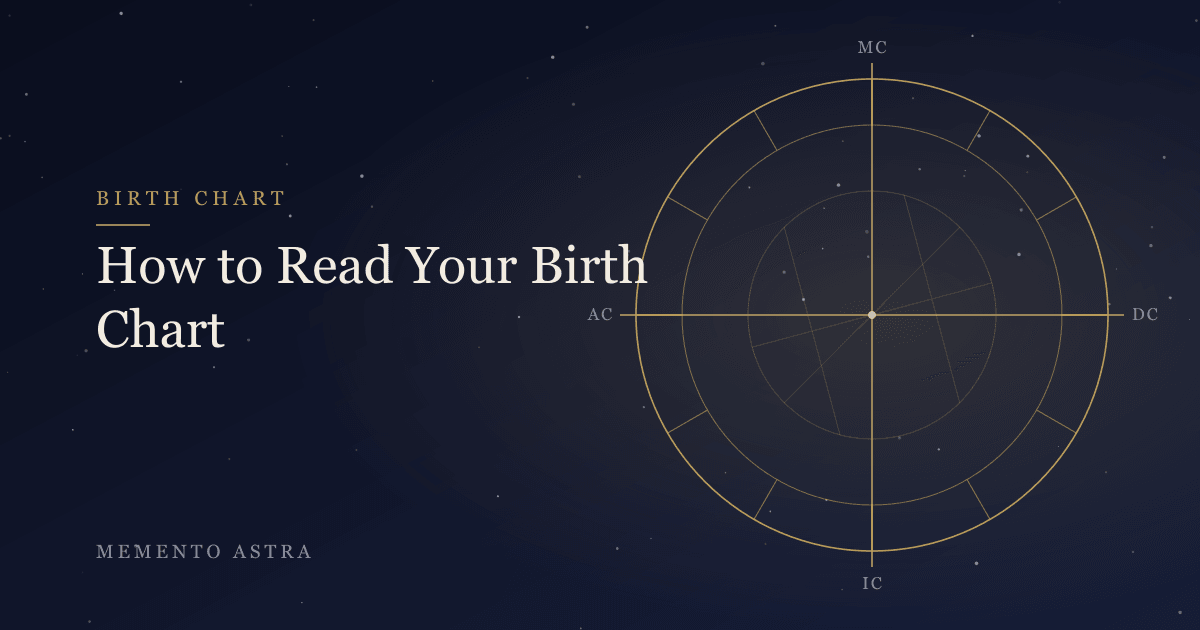
How to read a birth chart from scratch, in seven steps: what to look at first, what to ignore, and how to turn symbols into an actual person.